Jodie Armand – University of Sheffield, Public Engagement Team

Where did you go and what did you do?

I worked with the University of Sheffield’s public engagement team for my PIPs on a flexible part-time basis to help with two of their major public engagement events in the 2023/24 calendar: Biofest (Nov 2023) and the Festival of the Mind (Sept 2024). I was more heavily involved in the planning and delivery of Biofest compared to Festival of the Mind and they both utilised very similar skills, so to avoid this being too lengthy I’m just going to focus on my experience with the former.

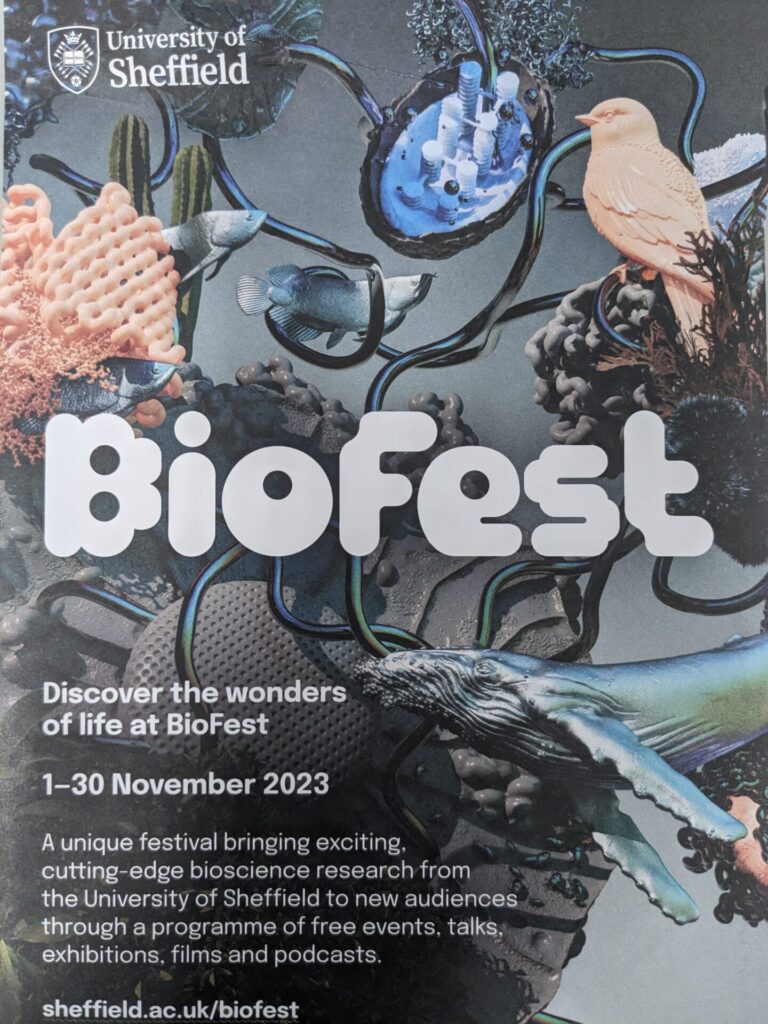
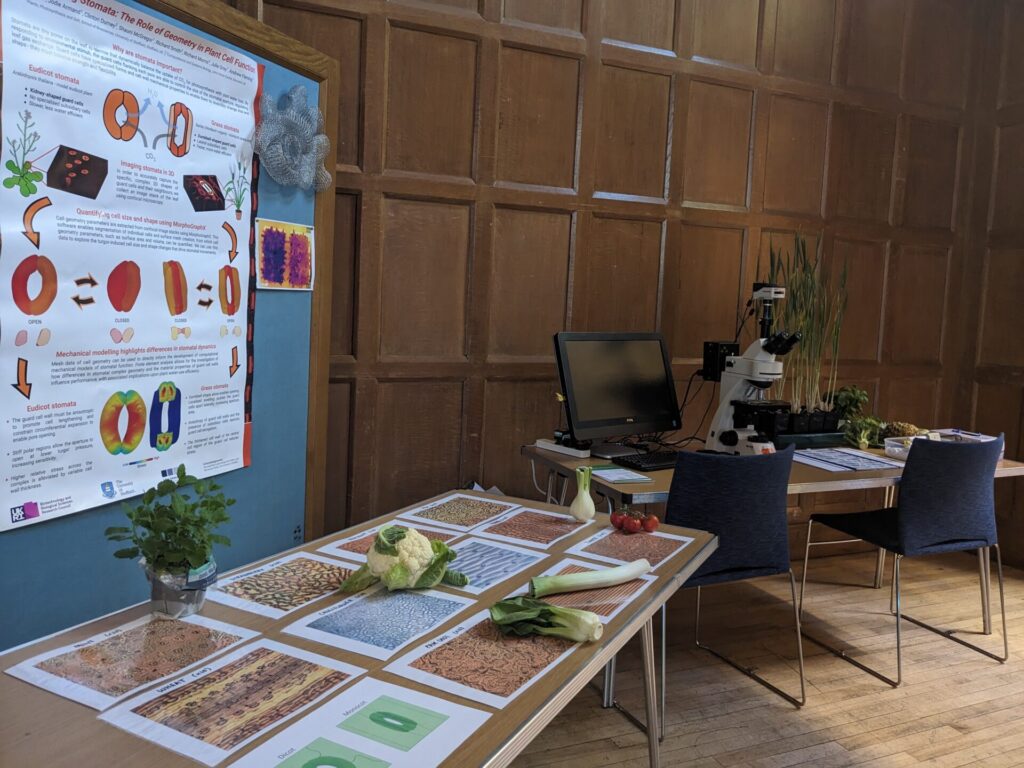
Biofest was a huge public outreach festival that was organised to showcase the amazing research taking place in the then newly formed School of Biosciences. We disseminated this research to the general public and key stakeholders in a variety of ways, including multiple science-art commissions, creative projects with local schools, and several public open nights where the University opened its doors to the public and engaged people of all ages with interactive activity stalls and inspiring talks from some of our most accredited scientists. It was a hugely successful and impactful event; over 200,000 people visited Firth Hall during the public open nights and 90% of visitors said that they came away with a better understanding of the research taking place in the department.

I took on a variety of different roles during my time with the public engagement team and helped with several aspects of the organisation and delivery of Biofest. This included liaising with the students and staff that were hosting an interactive activity stall during the public open nights to ensure their activities were safe, engaging and effectively communicated their research, as well as editing the brochure for the festival to make sure all its information was scientifically correct but easily accessible to a wide audience. After the festival I also helped analyse the public response and collected feedback from the students and staff that collaborated with artists and/or participated in the public events, which contributed towards the public engagement team’s formal evaluation of the festival’s success.


I also had the honour of working directly with the internationally renowned artist Luke Jerram who was commissioned to make a new piece of artwork for the festival that encapsulated our research endeavours in combating climate change. In this collaboration I took the role of scientific adviser and discussed with him all the photosynthetic research taking place in the department. This inspired him to create ‘Microcosmos’, a collection of glass diatoms (photosynthetic algae) which was the centerpiece to the festival and is now on permanent display in the entrance to Firth Court. During our collaboration I also visited his studio in Bristol to record a podcast about the science and creative process behind his artwork, which is on the University of Sheffield Player (digital archive). 

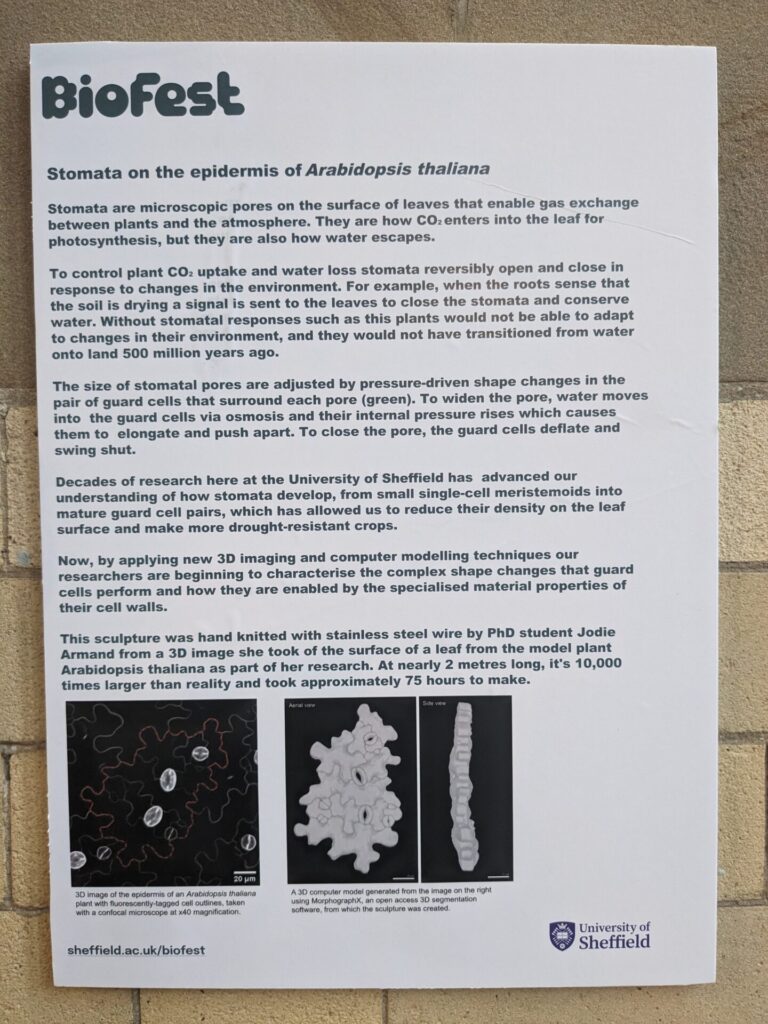
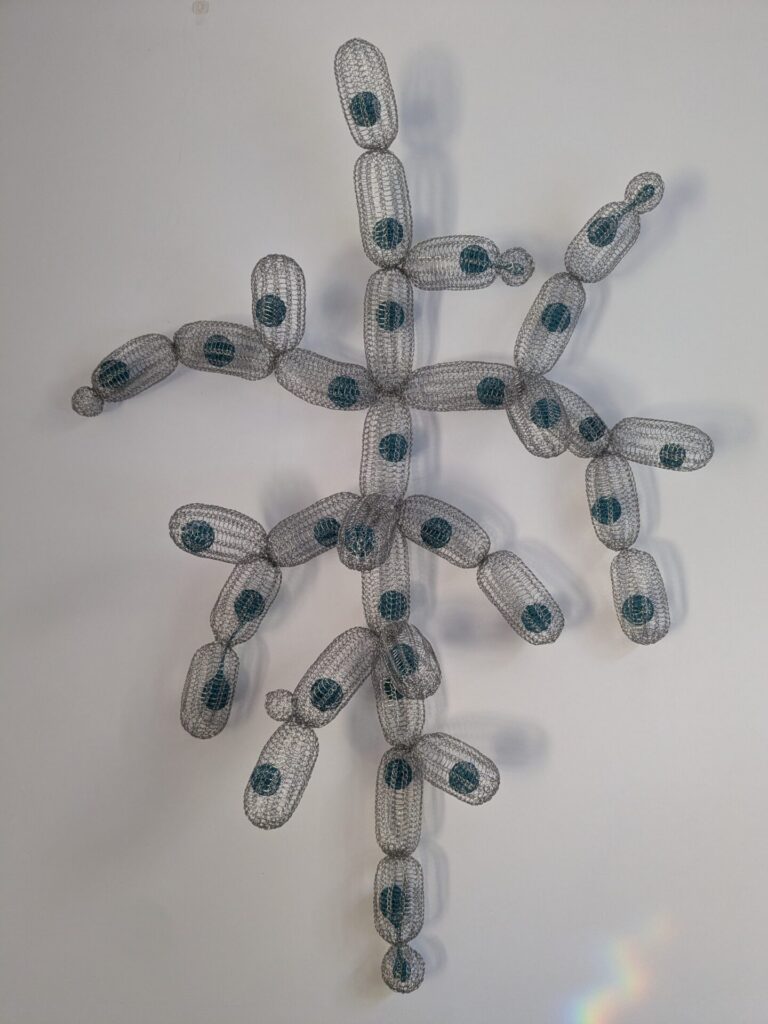
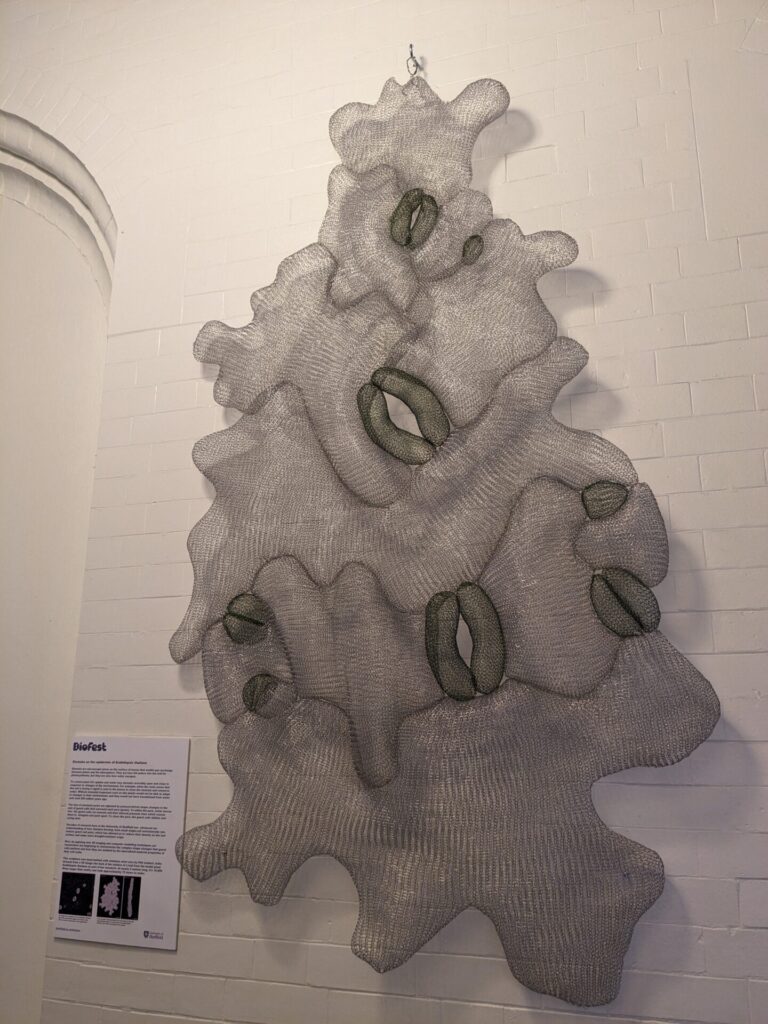
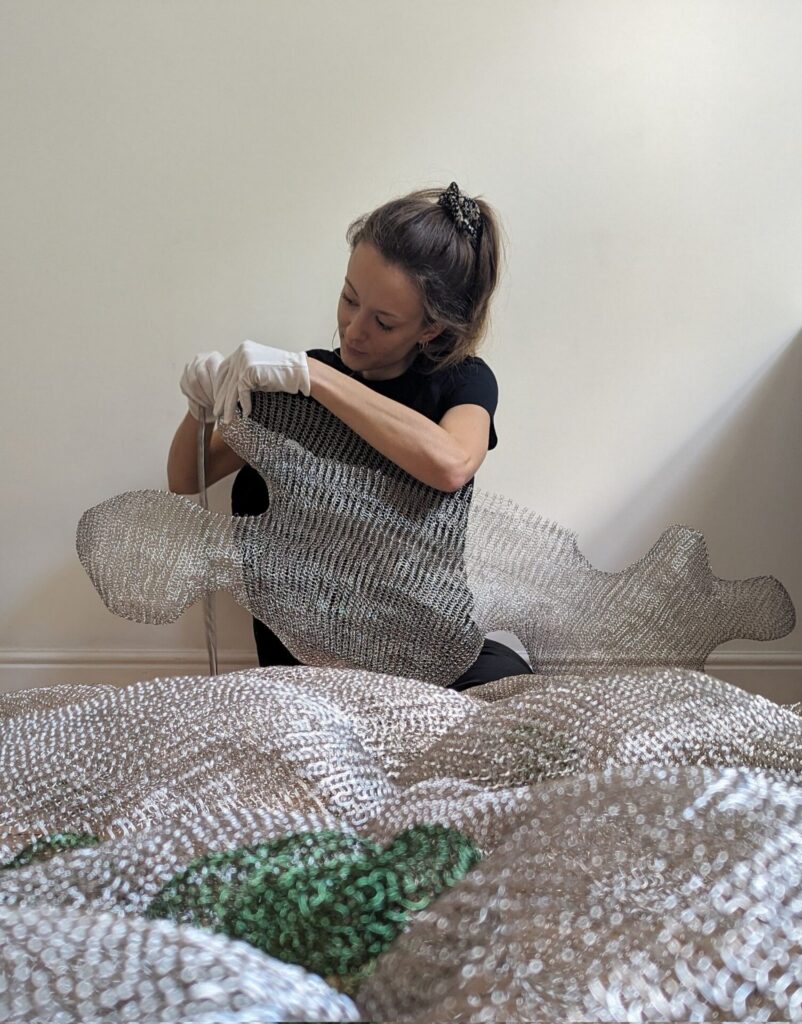
Feeling very inspired by my time working with Luke, I then decided to make a piece of artwork informed by my own research that utilised my own creative skills. I image cells on the leaf surface in 3D for my PhD to help us understand how they change shape, and I adapted my knitting technique to work with metal wire and went about knitting the cells captured in one of my 3D images using stainless steel. The final sculpture turned out much better than anticipated and I was fortunate enough to be allowed to have it on display during Biofest, and it was so well received that the University decided to purchase it and make it part of their permanent display in Firth Court. Thanks to the exposure from the festival I’ve since had several other commissions from scientists wanting to collaborate with me and create some science-art, and I’m currently working on a new sculpture for a ‘Future of Food’ exhibition that is taking place at the Science Museum in London this summer!

What made you want to do that particular PIPS?

I wanted to work with the University’s public engagement team for my PIPs because I have very strong practical creative skills that weren’t being used by my research, and I wanted the opportunity to apply these in an impactful way to help the general public engage in scientific research. I had actually had previous interactions with the public engagement team a few years earlier when trying to secure funding to collaborate with an external artist for the Festival of the Mind in 2022. Unfortunately we didn’t get the funding and so the project never went ahead, but it left me wondering how the public engagement team sources funding for public engagement projects and how they decide how this funding gets allocated.  So, a year or so later when I was thinking about where to do my PIPS, working with the public engagement team to utilise my creative skills and get an insider’s perspective on the funding landscape seemed like a no-brainer!

What skills have you gained from your PIPS?

Working with the University’s public engagement team for my PIPs definitely improved my event organisation, people and risk management, negotiation, and interpersonal skills. I’ve also come away from my PIPs with a much better understanding of how funding for public engagement is acquired and allocated having heard the conversations and decisions that take place behind the scenes. Rather than take a 3 month break from my research I decided to do my PIPs on a flexible part-time basis (a few hours per week) so that I could make the most of the different events that the team had planned throughout the 2023/24 calendar. This meant picking up extra work here-and-there and fitting this around my research was challenging, but it undoubtedly strengthened my time management skills. Finally, as you all know doing a PhD can feel very isolating, but when I was working with the public engagement team I was constantly interacting with new people of different ages, backgrounds and opinions which was so refreshing and I now feel much more confident talking to anyone about anything at anytime!


Think outside the box! Do something that you will genuinely enjoy, and make it worthwhile for you.


What has been the impact (or likely future impact) of your PIPS?

My PIPs and all the additional opportunities it led to have had such a positive impact on my future career. I now have a much better understanding of the career opportunities that exist in the public engagement sector,  and more specifically those that lie at the crossover between the sciences and the arts. Now that I’ve experienced sci-art collaborations as a scientist, an artist and the ‘middleman’ that sits between them,  I am so much more confident to explore this territory when I finish my PhD and I’m really excited to see where it leads!

How would you sum up your PIPS experience?

I thoroughly enjoyed working with the public engagement team for my PIPS due to the variety of different roles it allowed me to take, the independence to pursue my own creative ambitions and the wealth of opportunities that it has led to.


Gillian Caalim – Random42

Where did you go and what did you do?

I joined the Science and Project Management team as an intern at Random42 – a medical animation company. They specialise in visual scientific storytelling through various formats such as high quality animations, infographics, and virtual and augmented reality for pharmaceutical and biotechnology companies.

The science team are PhD-trained members involved throughout the whole process of an animation, so my role involved sitting in on client calls, researching the scientific background of projects, then drafting and referencing scripts. We create storyboards for the in-house animation team, and we also record AI voiceovers to create a draft of an animation. Along this entire process, there are multiple rounds of internal feedback with other members of the science team as well as the animation team, and external feedback from the clients.

As cliché as it sounds, no two days were the same! On any given day I could be working on a script about OCD, editing a storyboard about heart disease after receiving client feedback, then finishing off another storyboard about immune thrombocytopenia before briefing it to the animation team. The variety of topics kept the work exciting, and I really enjoyed the fast-paced environment I was in.

What made you want to do that particular placement?

I’ve followed a very traditional academic route so far and I wanted to see how the skills I have could be applied in a different setting, and how valuable these skills are in other industries. A PIPs at Random42 appealed to me as I knew it was going to challenge me to think about science in a new way – a chance to think more visually and create engaging narratives to tell a story – which I don’t get much chance to do while doing a PhD.

How did you go about finding and planning your PIPS?

The PIPs case studies listed on the WR DTP website was my first point of call. After reading through several case studies, I knew I wanted to do my PIPs at Random42. I sent my CV to Elly and Jen expressing my interest, and soon after we had a Zoom meeting set up to chat informally about what the role entails. It was all straightforward, and I appreciated that Random42 were flexible around start dates as I wanted to make sure my PhD was at a point that I was happy to take a 3-month break from it. They were also happy with my request for my PIPs to be hybrid, and I carried out most of my PIPs virtually.

What have you gained from doing your PIPS?

Naturally, I feel more confident about my science communication skills outside of writing in a very detailed and technical way that all PGRs are used to. I learned a lot about working in a fast-paced environment, as projects often move quickly so I needed to manage my time carefully to handle different projects at once. I also learned how to use the resources I have available more efficiently when researching topics I was very unfamiliar with, as scientific accuracy is at the core of every project.

I’ve gained a unique insight into client relationships, which I had never experienced before. Being able to handle their feedback constructively and understanding their personalities and expectations is so important to maintain good client relationships. I’ve also learned more about career paths as a whole – the science team are PhD-trained members and asking them about their career trajectories post-PhD was useful for me and I started to think about the things I could do after my PhD.

How would you sum up your PIPS experience?

I really enjoyed my experience at Random42, and I think a huge part of that is their work culture. They’re very collaborative and supportive of each other; everyone’s super lovely which made it easy for me from day one. That kind of positive environment made the work so much more enjoyable, and overall it was a very rewarding experience.

What advice would you give to other PGRs about PIPS?

Doing a placement is such a rare chance to try something different, so I would encourage others to use this opportunity to explore career paths you might not otherwise encounter! Regardless of what your PIPs experience shapes up to be, you’ll have much more clarity about how transferable your skills are, and whether it’s a career path you’re open to follow or avoid after your PhD.


Matt Craske – Bioscience Technology Facility, University of York

Where did you go and what did you do?

Over the past three months, I have undertaken a PIPS placement at the York Technology Facility working alongside Senior Research Technicians and Technician Specialists within the Imaging and Cytometry Department. A key aspect of this internship has been providing support for the day-to-day activities of different staff members across state-of-the-art instrumentation. These activities have primarily involved: weekly QC and maintenance of CytoFLEX cytometry machines, setting up and attending TF training courses (HEaTED, confocal and RMS light microscopy), shadowing and providing help for user training on flow cytometers (channel mode and spectral).

A highlight of this PIPS has been an introduction to the use of STEM imaging, a field I had no prior experience with. After receiving samples from external users, I was involved in pre-staining (En Bloc Staining), dehydration of fixed samples (graded series of ethanol) and resin embedding. Followed by ultrathin sectioning of the resin blocks onto grids and subsequent post-staining to enhance the contrast of organelles – ready for STEM imaging.

Alongside sample preparation, an overview of how the recently installed Zeiss GeminiSEM 460 operates was demonstrated, as well as imaging of user samples (mosquito muscle tissue, diatoms and brown algae).

Two overarching projects of this PIPS have included: 

  1. Testing of spectral flow cytometry – an alternative to conventional, channel-mode flow cytometry.
  2. The use of pre-defined panel (LegendPlex), multiplex immunoassays for the improved throughput of clinical work.

What made you want to do that particular PIPS?

The key reason I wanted to do this particular PIPS was to have the opportunity to be involved with the York Bioscience Technology Facility team. The group here are experts in scientific communication and can translate their knowledge of the facilities to help all fields of research (human, plant, yeast, bacteria). Alongside this, the work performed in the facility is vast, so no working day is the same and, in turn, gave the chance to learn many new technical/personal development skills. Finally, previous feedback from past students and case studies who’d undertaken their PIPS at the Technology Facility was also an influence on my choice.

What skills have you gained from your PIPS?

The most important skills I’ve learned from this PIPS are associated with scientific communication and teamwork/collaboration. Often day-to-day lab work as a PhD student can be very independent– whereas working daily alongside other group members in the TF across a range of different machinery/projects relied on good communication and collaboration with different technical specialists. The projects I was involved with often included working alongside both internal and external collaborators, which gave the opportunity to develop my skills as a team member and in scientific communication. From a technical point of view, I also gained an in-depth knowledge of the technical workings of many different tools used in bioscience imaging and cytometry.

What has been the impact (or likely future impact) of your PIPS?

The opportunity to partake in this PIPS with the York Bioscience Technology Facility has given me insight into the inner workings of what it is like to work in a core facilities unit and as a potential future career path. Outside of this, the key skills I have picked up during this time are both transferrable to my current PhD research and for potential future job opportunities.

How would you sum up your PIPS experience?

Overall, my PIPS experience involved three months of working alongside technical specialists on a wide array of different projects, where I was able to gain a number of new key and transferrable skills. I would highly recommend the York Biosciences Technology Facility as a PIPS host organisation for any PGRs looking for a host. 

What advice would you give to other PGRs about PIPS?

My advice to other PGRs would be to look for a PIPS opportunity that is outside your field of interest and use it as a chance to gain experiences/skills you wouldn’t pick up during day-to-day life as a PhD researcher. When discussing PIPS opportunities with a host, outline a plan with the organisation of what you both are looking to achieve with the experience. 


Monika Gonka – Oxford Nanopore

Where did you go and what did you do?

I undertook an internship at Oxford Nanopore Technologies (ONT) at the Oxford Science
Park, where I joined the Machine Learning Team. During my placement I developed an
app that enables initial evaluation of deep neural network basecaller models.

What made you want to do that particular PIPS?

I decided to do my internship at Oxford Nanopore Technologies because I wanted to
improve my bioinformatic skills in a company developing long-read sequencing
technology.

What skills have you gained from your PIPS?

I have improved my programming and software developer skills and expanded my
knowledge on Long Short-Term Memory models and transformer networks. I have also
learnt a lot about ONT basecalling fundamentals.

What has been the impact (or likely future impact) of your PIPS?

I grasped a deeper understanding of the industrial environment, the gained practical
experience will definitely help me in my future career.

How would you sum up your PIPS experience?

It was fantastic! I have learnt a lot, and I have met many amazing people from the
Machine Learning, Applications, Workflows, Product Management and Marketing Teams.
I also had a chance to go on the MinION manufacturing building tour. I had a great time
during my internship!

What advice would you give to other PGRs about PIPS?

Choose a field that you are actually interested in, it is a wonderful opportunity to get
industrial experience.


Tom Cozens – The Brilliant Club

Where did you go and what did you do?

My placement was at the University of Sheffield in the Biosciences teaching department with Dr Laura Corns. During my time on placement, I had the opportunity to engage with a variety of activities related to teaching and curriculum design. I first began by conducting a comprehensive review of the 1st year Neuroscience module. This review involved completing the modules lectures and making note of each topic’s relative difficulty and any concepts that were particularly challenging. I also conducted a survey of the previous year 1 Neuroscience cohort, where they rated the difficulty of each topic on a scale of 1-5. Finally, several volunteers from the previous cohort participated in a focus group where they gave more detailed thoughts on the module. All of this was combined into a report that was then presented to the ‘Introduction to Neuroscience’ lecturers. This report included a list of the most difficult topics, an analysis of the effectiveness of the current timeline of lectures, statistical analysis of the survey responses to quantify student ratings and highlight correlations between topics and a thematic analysis of focus group responses to identify recurring issues students had. All of this feedback was used to help inform the design of a supporting module handbook. This handbook is going to be an open educational resource that takes a more interactive approach to the module content. I identified Pressbooks as a good site to use and created an example chapter on one of the topics within the module, using Inkscape and H5P to create interactive resources. I also had the opportunity to  work on the development of the Biosciences Year 2 curriculum which is currently undergoing an overhaul. This mostly involved meetings with all the teaching staff where changes were discussed and each topic lead then had the opportunity to work with relevant staff to decide on content to include and general learning outcomes they wanted the module to meet. Finally, I was able to deliver some of the ‘Introduction to Neuroscience’ lectures this year and received feedback from staff and students.   

What made you want to do that particular PIPS?

I am in the final year of my PhD, and I am currently trying to determine where I want to go with my career from here. Academia is one of the options I am considering over others, but I had limited teaching experience at the higher education level and limited understanding of what the lecturer aspect of the role might look like. This placement provided me with the opportunity to deliver lectures, participate in the curriculum design process and talk with a variety of staff with many different job roles within the department. I also want to apply for the FHEA fellowship level and this placement would give me a much better chance to produce a successful application utilising the experience I would gain. All of these factors made this an excellent choice for my PIPS

What skills have you gained from your PIPS?

This placement was excellent for learning a wide variety of different skills; a lot of these skills relate to designing curriculum at many different levels. In meetings with all the teaching staff I got to learn how learning outcomes for modules are determined, how assessment types for different modules are allocated and had the opportunity to give my own ideas on these things and on what potential content should be included in 2nd year Neuroscience. I was also tasked with making a supporting resource for the 1st year module and quickly decided I wanted it to be quite interactive to complement what students would learn in lectures. With advice from staff, I decided to make it an open educational resource (OER) which, when finished, would be available for use by other universities or anyone interested in learning more about neuroscience. This allowed me to learn how these resources are made which included creating my own interactive figures/tasks. To do this I utilised Inkscape for creation of vector images and H5P to create interactive elements, two software’s I was previously unfamiliar with.

It also challenged me to take concepts that can be quite complex and turn them into tasks that would be far more approachable to students with a variety of learning styles who may be struggling with the content. I also learned how to make surveys and handle the data, both from a confidentiality and statistical standpoint. I was already familiar with statistical analysis, but it was interesting to handle data dthat is completely different to what I typically use. I also had to write an ethics application for the survey and the focus group and learned how to recruit participants and draft appropriate questions. The focus group also included a subsequent thematic analysis of the transcript, another task I had never done before. This qualitative analysis was very different to what I typically do in my PhD, so it was really interesting to learn some of the skills more commonly used in educational research. Finally, I learned how individual lectures are designed to incorporate the learning objectives/outcomes of the module. This also included delivering several lectures to a large cohort. Overall, I learned a variety of skills that I feel really capture a lot of the responsibilities a university lecturer may have.

What has been the impact (or likely future impact) of your PIPS?

The most obvious impact is the way the placement has given me confidence on my career progression. I thoroughly enjoyed a lot of the different aspects of this placement, but this is especially true for delivering lectures to students and helping to design future curriculum with other members of staff. This has emphasised to me that I would like to continue on the academia route if possible, or in higher education in general as I found the whole experience really rewarding. Additionally, a portion of this placement also included working from home and this placement has really helped me improve my productivity outside of the lab, which I have previously struggled with. Finally, I have contributed to creating an OER that many people will hopefully eventually use and credit me for. This is an excellent asset to have on my CV and is especially useful if I want to apply for teaching jobs in the future. I will also use this as one of my case studies when I write my FHEA application, so the whole placement has been extremely beneficial for my career and for the number of new skills I have learned.

How would you sum up your PIPS experience?

My experience really solidified my career goals and helped me identify the options I have if I want to work in higher education. It also gave me the opportunity to learn a wide variety of skills that will be useful for many different jobs I may pursue in the future. Finally, I had a great time  interacting with students and staff and an excellent supervisor that really helped me enjoy my PIPS.

What advice would you give to other PGRs about PIPS?

Consider what you would like to get out of your PIPS before you decide what you actually want to do for your placement. Once you have that, pick something you think you will enjoy and that will give you a good variety of skills for the career options you want to pursue. Most importantly, organise your PIPS as soon as possible so you don’t have that stress later on in your PhD.


Mawgan Trebell – Random42

Where did you go and what did you do?

I undertook my PIPS at random42, a company that produces high quality medical animations for various companies. Animations generally involved demonstrations of MoD’s of target diseases, or MoA’s of various drugs to treat these diseases. During my internship, I had the role of creating scripts for these animations based on client briefs. This involved reading around the literature and finding references to build a story that we could incorporate into the animation. Alongside this, I also worked to create storyboards of these scripts. These directed the animation team as to what we wanted to show in each scene of the animation alongside the script narration. I was then often involved in subsequent client feedback meetings, after which I would tweak the script / storyboard to match the vision they had for the animation.

What made you want to do that particular PIPS?

As someone who’s research is primarily based on live cell imaging, I already had a strong interest in the use of visual imagery to explain research in a more interesting and understandable way. As a result, random42’s focus on using 3D and 2D animation to illustrate a range of disease pathologies and drug treatment mechanisms appealed to me. I also knew that working in an environment where I work on a range of different diseases and read around a lot of literature would help me with future research, alongside improve my writing skills.

What skills have you gained from your PIPS?

I have gained a wide range of skills from my PIPS. First, I have learnt how to more quickly read around a new topic and gather relevant information that can be used in a script/paper. I have also learnt how to more effectively put together a story within a piece of writing. Alongside this, because my scripts had to be communicated to a non-scientific expert audience of animators, my ability to explain scientific ideas and mechanisms to a wider audience improved significantly. Due to the wide range of tasks I might get in a day, I also developed a stronger ability to jump quickly between tasks in order of priority rather than focusing hard on one thing for a long period like I tended to do during PhD work. Finally, experience of client facing meetings helped improve my communication ability in a business context.

What has been the impact (or likely future impact) of your PIPS?

Doing my PIPS has reaffirmed my enjoyment of visually supplemented research communication and kept my focus on making sure that is something I incorporate into my own work. I will also keep this industry in mind when making future job decisions.

How would you sum up your PIPS experience?

I had a great experience during my PIPS. Everyone I worked with was extremely kind and helpful, and everything ran smoothly despite being mostly remote. I got to work on a wide variety of tasks and topics and was always given meaningful work that would result in tangible deliverables for the company. I gained some important skills that I can carry forward into the remainder of my PhD that will help towards getting my thesis together at a higher quality!

What advice would you give to other PGRs about PIPS?

Make sure to target a PIPS that is relevant to an interest you have in some way. Also try and do something different from what you do day to day in your PhD, so that it feels fresh (this will also help you feel ready to go when you finish the PIPS).


Veronica Thuburn – Apis Assay Technologies

Where did you go and what did you do?

Apis Assay Technologies Ltd is a medium-sized Biotech company whose main line of work is in internal and contract development of qPCR-based diagnostic assays, as well as bioinformatic services. I was based at their headquarters in central Manchester, but the company also has a site in Belgrade (Serbia). I worked as a technical assistant in the contract development team. My work was predominantly lab-based, and involved planning, carrying out and reporting on the outcome of studies for an external client.

What made you want to do that particular PIPS?

I really enjoy bench work, so I knew that I wanted to stay in a lab-based environment, but I’ve not had any experience outside of academia, so I took this opportunity to apply my background in molecular biology to a new setting, and explore the differences between academia and industry, to see how well I could adapt. I have also never had to commute to work, so I thought I could use the placement as a trial period, to see how feasible commuting could be in the long term.

What skills have you gained from your PIPS?

In terms of technical lab skills, the main new technique that I learned was digital PCR, which can provide absolute quantification of nucleic acids in a PCR reaction. I was also exposed to the level  of quality control processes in industry compared to academia, which I think is difficult to appreciate without directly being involved in its implementation. Outside of the lab, this placement exposed me to a wide array of writing styles, such as health and safety documentation, protocol and report writing. Whilst I gained many new skills on this placement, it also made me recognise how many transferable skills I had already gained through my PhD, by giving me an opportunity to put them into practice. In my opinion, this was equally, if not more valuable a lesson to learn.

What has been the impact (or likely future impact) of your PIPS?

Having the opportunity to experience technical work in an industrial setting has broadened my options in the future. I now have a better idea of the similarities between equivalent jobs in academia and industry, which will help me when applying to jobs and catering my CV towards jobs in industry. I also n have a greater appreciation for what it takes to be a regular commuter and considerations involved when deciding where to work and live.

How would you sum up your PIPS experience?

Overall, I had a brilliant experience at Apis! The company culture was very encouraging, respectful and understanding of individual needs. I felt very well supported by the team. Effort was clearly made for interns to make the most out of our time there and to shape the experience according to our interests. I would definitely recommend undertaking a placement at Apis.

What advice would you give to other PGRs about PIPS?

I have three pieces of PIPs advice for PGRs:

  1. There won’t ever be a “right time” in your PhD to do PIPs, so start your search sooner rather than later for maximum flexibility.
  2. Immerse yourself in the lifestyle and opportunities that come with the job – this is your chance to walk a mile in someone else’s shoes!
  3. Keep a diary of your experience, including what you’ve enjoyed or found challenging. It’ll help when it comes to reflecting on your time there – and beyond!

Deep Science Ventures – DSV Opportunity Area Scoping – Apply Anytime

Background

Deep Science Ventures is a venture creator building deeptech companies in 4 sectors: Agriculture, Climate, Computation and Pharmaceuticals. We deliver this work through funded partnerships with organisations like Coca-Cola, AbbVie, Anglo American, the Advanced Research and Invention Agency – ARIA, and Cancer Research UK. DSV has founded 59 companies across a broad range of domains, from direct air capture to production of green steel and therapeutics for cystic fibrosis to thermal protectants for crops. We take an outcome-centred approach, starting with the problem we wish to solve and working backwards to identify the necessary solutions, building high impact companies.

Project Outline

Project title: DSV Opportunity Area scoping: identifying neglected opportunities to build new ventures that tackle climate, nature loss or food security challenges – remote (team gather in London office every Wednesday)

Project description

The first stage in DSV’s venture creation process is to identify ‘Opportunity Areas’ – discrete areas where we see high potential impact and exciting white space, making it suitable for building new companies with our Founders in Residence. An example of this would be ‘Priming plant resilience’, an Opportunity Area that proposes to build the toolkit for modulating plant resilience on demand,  and thereby deliver speed and flexibility to crop traits for handling volatile climate risks. This project aims to overcome the bottlenecks of conventional crop breeding (long development timelines, productivity trade-offs, GMO regulations) by developing complementary products that leverage modes of action such as RNAs, developmental peptides or microbial partners that can be deployed in the field.

To identify such an Opportunity Area requires first a broader landscape mapping around a challenge such as ‘crop losses to abiotic stress’ or ‘methane emissions mitigation’. This process involves desk-based research to build a system map of the challenge and potential intervention points, with the goal of uncovering specific areas that are neglected within the current commercial / innovation landscape, but where we believe there is scope for novel technologies to have high impact upon the problem we wish to solve, and which are specifically suitable for venture creation. We are seeking individuals to collaborate with our team on this Opportunity Area identification process – providing PIPS candidates with the platform to apply their technical knowledge and creativity to develop an understanding of how venture creation opportunities are identified.

DSV works on challenges across climate, nature loss and food security, and we are therefore open to taking on board PIPS with expertise and interest in these areas. We would co-define the problem space for scoping prior to agreement and start of the project. This allows the PIPS candidate to explore a challenge that they are motivated by, while also ensuring that the outputs (specific ‘Opportunity Areas’ recommended for future company builds) can meaningfully feed into DSV’s venture creation pipeline.

The project would last three months, with the ultimate output being a report that maps the selected problem space, analyses the existing state of the art solutions, and identifies neglected constraints and opportunities that need to be addressed to solve the root causes of the problem. Within these neglected spaces, the report will then go deeper to analyse the technical and commercial tractability of new solutions that could form the basis for creating new companies.

This scoping process follows an established model for Opportunity Area identification that we conduct with our partners, providing a framework to help the PIPS candidate hit the ground running with their research. While the role is mainly remote, they will work closely with support from Will Summers (senior associate) and Pina Fritz (head of scoping). The candidate should be highly self-motivated, creative and enjoy thinking from first principles – they will be challenging assumptions and digging into unfamiliar scientific domains to consider the opportunities that entire sectors might be missing!

Candidate requirements

  • Technical background that is suitably aligned to the problem space they wish to scope for Opportunity Area identification
  • Demonstrable interest in science translation and venture creation

Timeframe and start date

Start date is flexible, to be agreed between DSV and the individual

Contact

Dr William Summer, [email protected]

PIPS Opportunity – Cikananga Wildlife Centre – Regenerative Sustainable Eco-Agriculture

Background

Cikananga Wildlife enter (YKT) is a non-governmental and non-profit organization for conserving Indonesian wildlife. It encompasses ikananga Wild Animal Rescue enter (PPS ), onservation Breeding enter ( B ), Sustainable Farming Program (PPB ), and Wildlife Learning enter. The enter was established in 2001. Since then, it has been dedicating its efforts to the welfare and conservation of Indonesian wildlife and its habitat. It provides facilities and support to rehabilitate confiscated wild animals, helps them regain natural behaviour lost during captivity, and tries to reintroduce them into their natural habitat.

The centre also provides a permanent sanctuary for animals that cannot be released back into the wild. There are about 550 animals ranging from crocodiles to hornbills and sun bears to primates such as orangutans and gibbons. Most animal are (critically) endangered, and on the brink of extinction. They usually arrive at Cikananga in a severely neglected state and
need medical care. Y KT aims to assist the government in rescuing and conserving Indonesian wildlife and teaching the public about the correct treatment and care of animals.

The Sustainable Farming Program or Program Pertanian Berkelanjutan Cikananaga (PPB ) is dedicated to sustainable agriculture practices that support food for the animals at Y KT, supporting local communities, preserve natural resources, and contribute to wildlife conservation in Indonesia.

The mission of PPB is to promote sustainable food systems that protect biodiversity and foster ecological balance. Through regenerative agriculture, agroforestry, and eco-friendly farming practices, PPB works to create a positive impact on both local communities and the environment.

Project Focus

The placement will involve defined projects tailored to the student’s background and PhD topic. Areas may include:

  • Soil health and nutrient cycling
  • Integrated pest management
  • Comparison of soil mulches on soil moisture and weed suppression
  • Pollinator diversity in regenerative systems vs conventional farms
  • Cost analysis of regenerative vs conventional farming
  • Regenerative land management practices
  • rop-soil interactions and sustainable
    productivity
  • Field-based data collection and analysis

What you will gain

  • Practical experience in regenerative agriculture systems
    • Propagation, greenhouse management and maintenance, harvesting and post-harvest handling, soil cultivation and composting, compliance with organic growing standards.
  • Exposure to applied science beyond academia
  • Development of transferable skills:
    • Project design and management
    • Science communication
  • Insight into careers in environmental and agricultural sectors

How to apply

Please send the following:

  • A short expression of interest (max 1 page)
  • CV
  • Brief statement on how this placement aligns with your PhD
  • to [email protected]

Main contact

Scott Hartle, Farm Manager
[email protected]
Website: https://www.cikanangawildlifecenter.com/
Instagram: @ppbc_cikananga

Multiple PIPS Opportunities – Chief Data Officer Group, UK Health Security Agency

About UKHSA

UK Health Security Agency (UKHSA) is an executive agency, sponsored by the Department of Health and Social Care (DHSC). At UKHSA, our mission is to protect people’s health by preventing and responding to threats—whether that’s a new pandemic, everyday infections like influenza, or environmental dangers like radiation or extreme weather. We save lives, protect livelihoods, and work with partners across the NHS, care systems, and globally to keep communities safe.

We’re a hub of scientific and operational expertise, tackling health challenges at every level—local, national, and international.

The Chief Data Officer (CDO) group is the analytical powerhouse of UKHSA and plays a key role in making sure data is used safely, legally, and ethically. We support every step of the data journey—from collecting and managing information to analytics and delivering insights that drive real-world action. If you’re passionate about using data to make a difference and want to help solve big health challenges, there’s a place for you here in the CDO group.

Period of placements

Placement start date: April 2026 onwards
Duration: 3 months

Working pattern and location of placements

Placements will be remote/hybrid with occasional office/event attendance, but this is at the successful candidate’s discretion. Our head office is in Canary Wharf, we also have offices in Liverpool, Leeds and Birmingham.

Full-time is preferred so you can fully immerse yourself in the team and project, but we will work flexibly if part-time hours are required. Placements must be completed in one continuous block due to IT and data access/security requirements.


Placements

The UKHSA are offering a number of placements which will be suitable for PIPS:

  • D&D and AI Digital Delivery (MT)
  • Digital and Data Mapping (P)
  • Digital & Data Product Analysis (L)
  • Digital & Data Project Management
  • UKHSA Health Data Model DTP Placement

Please use the links below to see further information on each placement:


How to apply

Closing date for applications: 31st May 2026

Application format: CV and a 500/1000-word (max) cover letter to evidence how you fit the project requirements, skills and what you can bring to this role.

How to submit an application:

Send your CV and a cover letter (max 500/1000 words) to the CDO Partnerships Team, UKHSA, [email protected] with the subject line of the role to which you’re applying e.g. “AI Digital Delivery DTP application”.

Please note this opportunity is being advertised at multiple universities.


Support for students

UKHSA is an excellent placement opportunity as we have a developed culture of learning and development, fostered in an inclusive environment. To ensure that the postholder has opportunities to expand their skillsets and to develop professionally, we can provide some training in analysis, where required, but we also encourage the student to engage with subject matter experts and other early career researchers (ECR) across the UKHSA. At UKHSA, we have a thriving Early Career Research network led by our CDO Partnerships team. The student will have the opportunity to join and be supported by the ECR network within the UKHSA, and by other ECRs and team members within the host team. The ECR network has fortnightly meetings to bring learning and development opportunities to placement students as well as quarterly away days at our head office.