
The Company of Biologists – Disease Models & Mechanisms (DMM)

The Company of Biologists exists to support biologists and inspire advances in biology. At the heart of what we do are our five specialist journals – Disease Models & Mechanisms, Development, Journal of Cell Science, Journal of Experimental Biology, and Biology Open – two of them fully open access. All are edited by expert researchers in the field, and all articles are subjected to rigorous peer review. We take great pride in the experience of our editorial team and the quality of the work we publish. We believe that the profits from publishing the hard work of biologists should support scientific discovery and help develop future scientists. Our grants help support societies, meetings and individuals. Our workshops and meetings give the opportunity to network and collaborate.


Project Outline

The disease biology research journal Disease Models & Mechanisms (DMM) is looking for an enthusiastic intern through the BBSRC DTP/PIPS or equivalent schemes. DMM publishes primary research articles and a well-regarded front section of reviews, perspectives, interviews and editorials.

During the internship, you will have the opportunity to learn more about the publishing process. We believe that these internships are of value to those who are either aiming to stay in research – as they give an insider view of how journals work – or considering alternative careers such as publishing. These internships also provide experience of prioritising work and understanding real-life applications of project findings from a more business-oriented perspective.


Key Responsibilities

Core responsibilities will include:

  • Conducting interviews with high-profile scientists in the biomedical area.
  • Writing monthly highlight articles for publication.
  • Promoting journal content, including press releases for newsworthy articles.
  • Running the journal social media platforms.
  • Creating content for the journal and Company websites, with a focus on bringing together charitable and journal activities.
  • Helping to develop a series of articles focused on rigour and reproducibility in disease biology research.
  • Contribute to special editorial projects on the journal.

What We’re Looking For

The successful candidate will have:

  • Relevant scientific expertise (ideally in the disease biology field)
  • Experience (formal or informal) with science communication through social media, writing or outreach activities
  • Excellent written and verbal communication skills; the ability to translate complex scientific concepts into accessible language
  • Strong interpersonal skills and networking abilities.
  • Enthusiasm, commitment, judgement, integrity and a mature attitude.
  • Previous editorial experience is not required.

How to Apply

We are looking for an intern to start in the autumn of 2026 and encourage interested candidates to submit their application as soon as possible. To apply, please send a CV and cover letter, stating why you are interested in this opportunity, to [email protected] and Rachel Hackett (DMM’s Managing Editor) at [email protected]. Please also direct informal enquiries to the same addresses.

Applications should be made as soon as possible and by 14 September 2026.


Internships at Sense About Science – Apply Anytime

Sense about Science promotes the public interest in sound science and evidence. It is a unique campaigning charity that has turned the case for sound science and evidence into a popular cause. It has launched important initiatives to expand and protect open discussions of evidence, including Transparency of Evidence to secure openness for the public about the evidence behind decisions, AllTrials, an effective global campaign for the reporting of clinical trials; and, with Nature, it runs the international Maddox prize for standing up for science. It engages the public in ‘Asking for Evidence’ and leads initiatives to make subjects such as risk, uncertainty, data science and AI accessible.


Project Outline

An internship at Sense about Science is a rewarding experience, as no two days are the same. It is a fulfilling way to get practical experience of communications, policy and public engagement, and issues of research quality, developing key professional skills and contacts that will serve you well in your future.

You will work across a range of our projects and programmes – including Evidence Week, the John Maddox PrizeVoice of Young Science , Public Engagement Partnerships and Transparency of Evidence Standard Campaign depending on the timing of your placement. You’ll always be a critical member of the team and we’ll try to tailor internships according to your interests as far as possible, to ensure that you get the most out of your time with us. We typically have at least two interns working with us in our London office at any one time.


Essential Skills

  • Ability to identify and use initiative to solve problems
  • Ability to organise and prioritise work
  • A flair for clear, engaging writing
  • Friendly manner
  • Candidates should be familiar with and share the Sense about Science ethos regarding the public interest in sound science and evidence

If working with us during the run up to Evidence Week (April 2027 – July 2027), the following attributes are highly desirable:

  • An interest in, and understanding of, how the UK Parliament works
  • Confidence communicating with senior stakeholders, both in person and over the phone
  • Proficiency in Microsoft Excel

Eligibility

Please note we can only consider short-term internship applications as part of a funded opportunity or scheme, such as, but not limited to, the PIPS professional internship scheme, for PhD students. If you don’t have access to funding support for an internship, then please discuss funding opportunities with your institution or research funder, as we are unable to offer funding at this time. We cannot offer unfunded/self-funded internships.

We are currently accepting applications for all of 2027 and will be reviewing them on a rolling basis.


How to apply

To apply, send your CV and a cover letter outlining how your skills match the requirements to [email protected] with the subject line “Student Internship.” Please indicate on your application if you are interested in interning with us in the run up to Evidence Week (April 2027 – July 2027), and how your skills meet the required attributes.

If you have any questions about our internship vacancies, please don’t hesitate to contact us at the same email.

Placements are usually 3 months and based in our Central London office, but we are flexible. Our office is located in the heart of London, a short distance from Oxford Circus and Regent’s Park. We normally work from our office for 4 days a week, so having the option to be within commuting distance of London is advantageous, but if this is not possible then please let us know.


BugBiome – Microbial Phenotyping Internship

BugBiome is focused on discovering and developing biopesticides derived from crop microbiomes. By isolating and characterising beneficial microbes, we create innovative solutions that naturally protect plants from pests. Our mission is to improve crop protection, reduce reliance on traditional pesticides, support yield, and promote environmental sustainability.


Project Outline

We are seeking a PhD student with experience in microbiology, molecular biology, or image-based assays to join our R+D team for a 3-month internship. This role suits a driven individual who can independently set up experiments that profile our microbes and read early signals of how they work. You will work closely with a cross-functional team of scientists. As this is a wet lab role, it will be largely laboratory based at Norwich Research Park.

Option to learn valuable skills in high-throughput phenotyping, video-based insect assays, and data analysis. This role is a great way to gain hands-on experience outside academia at a fast-paced, IndieBio backed start-up.

Project Focus

This project profiles our strains at scale by imaging microbes, capturing growth and behaviour as structured, comparable data. It then links that microbe-side profile to our video-based insect assays, extending them from insect response to chemistry towards the effect of biological actives. Together this gives a crude mode-of-action data set that informs primary screening for new insect control microbes, so the team can promote the most promising strains sooner and choose more accurate follow-up assays

Key Responsibilities

  • Laboratory support: Set up and run microbial phenotyping, preparing strains and plates under the guidance of the team.
  • Assay development: Apply our video-based insect assays to read the effect of biological actives, generating crude mode-of-action signals via insect behaviour.
  • Data analysis: Collect and analyse phenotype and assay data, feeding findings into primary screening decisions.
  • Collaboration: Work closely with our discovery and screening teams, gaining insight into how
    microbiological research connects to broader commercial goals.

What We’re Looking For

  • Educational background: Currently pursuing a PhD in life sciences or a related field.
  • Technical skills: Familiarity with microbiological, imaging, or assay techniques is preferred, and a willingness to learn and adapt is essential.
  • Team player: Able to work collaboratively with diverse teams while managing tasks independently.
  • Proactive attitude: Enthusiasm for problem-solving and a proactive approach to driving projects forward.

What We Offer

  • Hands-on experience: Work with advanced technologies and methodologies in a supportive learning environment, with the option to gain some business development exposure.
  • Professional development: Build your skills and knowledge, and gain valuable industry experience outside of a university.
  • Collaborative culture: Join a young, friendly, dynamic team with regular team socials.

How to Apply

To apply, send [email protected] and [email protected] an email with your CV using the subject line “Assay development Intern”. Please tell us why you are interested in the role, the doctoral training programme you are on, and when you would be available. The ideal timeline is Q4 2026 (October to December), 2027 possible.

BugBiome – Assay Development Internship

BugBiome is focused on discovering and developing biopesticides derived from crop microbiomes. By isolating and characterising beneficial microbes, we create innovative solutions that naturally protect plants from pests. Our mission is to improve crop protection, reduce reliance on traditional pesticides, support yield, and promote environmental sustainability.


Project Outline

We are seeking a PhD student with experience in microbiology, analytical chemistry, or assay development to join our R+D team for a 3-month internship. This role suits a driven individual who is comfortable with Design of Experiments (DOE) and confident at the bench. You will help take our AMPS assay beyond its current baseline and towards its full sensitivity. You will work closely with a cross-functional team of scientists. As this is a wet lab role, it will be largely laboratory based at Norwich Research Park.

Option to learn valuable skills in DOE design, high-throughput plate work, and data analysis. This role is a great way to gain hands-on experience outside academia at a fast-paced, IndieBio backed start-up.

Project Focus

AMPS was built on 24 substrates. This project takes a DOE approach across the full substrate space, so the assay draws on every substrate worth including rather than the current 24 limited substrate list. The aim is maximum sensitivity. You will design the substrate panel, run the plates and read out which substrate utilisation patterns correspond to the desired outcome. Support of media kitchen and biofoundary at Earlham.

Key Responsibilities

  • Experimental design: Design a DOE across candidate substrates to maximise assay sensitivity.
  • Laboratory support: Prepare and run plates at a scale of around 100 plates. Media kitchen on site at John Innes and robotics available at Earlham if you are interested in setting it up high throughput!
  • Data analysis: Identify which substrates are informative of microbe function.
  • Collaboration: Work closely with our interdisciplinary teams, gaining insight into how assay development connects to broader commercial goals.

What We’re Looking For

  • Educational background: Currently pursuing a PhD in life sciences, chemistry, or a related field.
  • Technical skills: Familiarity with DOE and laboratory plate work is preferred, and a willingness to learn and adapt is essential.
  • Team player: Able to work collaboratively with diverse teams while managing tasks independently.
  • Proactive attitude: Enthusiasm for problem-solving and a proactive approach to driving projects forward.

What We Offer

  • Hands-on experience: Work with advanced technologies and methodologies in a supportive learning environment, with the option to gain some business development exposure.
  • Professional development: Build your skills and knowledge, and gain valuable industry experience outside of a university.
  • Collaborative culture: Join a young, friendly, dynamic team with regular team socials.

How to Apply

To apply, send [email protected] and [email protected] an email with your CV using the subject line “Assay development Intern”. Please tell us why you are interested in the role, the doctoral training programme you are on, and when you would be available. The ideal timeline is Q4 2026 (October to December), 2027 possible.


BugBiome – Natural Product Chemistry Internship

BugBiome is focused on discovering and developing biopesticides derived from crop microbiomes. By isolating and characterising beneficial microbes, we create innovative solutions that naturally protect plants from pests. Our mission is to improve crop protection, reduce reliance on traditional pesticides, support yield, and promote environmental sustainability.


Project Outline

We are seeking a PhD student with experience in natural product chemistry or analytical chemistry, and who is capable of running natural product extractions and preparing fractions independently, to join our R+D team for a 3-month internship. This role suits a driven, chemistry-trained individual who can set up experiments and work methodically. You will work closely with a cross-functional team of scientists. As this is a wet lab role, it will be largely laboratory based at Norwich Research Park. This role is a great way to gain hands-on experience outside academia at a fast-paced, IndieBio backed start-up.

Project Focus

This project will use BugBiome’s proprietary collection of more than 2,500 microbial strains to create a curated natural-product extract library that will be screened by BugBiome for novel insecticides. BugBiome currently evaluates polar and low-molecular-weight fractions produced from microbial fermentations by an external collaborator. This project will bring that capability in-house, establishing a structured library of natural-product fractions from our own microbial collection. We are looking for a student with strong practical chemistry skills to lead the extraction and fractionation work. The student should be comfortable independently developing and carrying out natural-product extraction, separation and fractionation workflows. Previous microbiology
experience is not required, as full training in microbial culture, fermentation will be provided.

Key Respondibilities

  • Library building: Ferment and extract selected high-value strains, producing polar and small fractions towards a core set of strains with the support of the John Innes Metabolomics platform where needed.
  • Screening: Apply our insect screening platform to the natural-product extract library.
  • Collaboration: Work closely with our interdisciplinary teams, gaining insight into how natural product chemistry connects to broader commercial goals.

What We’re Looking For

  • Educational background: Currently pursuing a PhD in natural product chemistry, analytical chemistry, or a related field.
  • Technical skills: Hands-on extraction and fractionation experience is preferred, and confidence with analytical methods is valued.
  • Team player: Able to work collaboratively with diverse teams while managing tasks independently.
  • Proactive attitude: Enthusiasm for problem-solving and a proactive approach to driving projects forward.

What We Offer

  • Hands-on experience: Work with advanced technologies and methodologies in a supportive learning environment, with the option to gain some business development exposure.
  • Professional development: Build your skills and knowledge, and gain valuable industry experience outside of a university.
  • Collaborative culture: Join a young, friendly, dynamic team with regular team socials.

How to Apply

To apply, send [email protected] and [email protected] an email with your CV using the subject line “Natural product Intern”. Please tell us why you are interested in the role, the doctoral training programme you are on, and when you would be available. The ideal timeline is Q4 2026 (October to December), 2027 possible.


UKHSA Chief Data Officer Group – Deadline 31st July 2026

UK Health Security Agency (UKHSA) is an executive agency, sponsored by the Department of Health and Social Care (DHSC). At UKHSA, our mission is to protect people’s health by preventing and responding to threats—whether that’s a new pandemic, everyday infections like influenza, or environmental dangers like radiation or extreme weather. We save lives, protect livelihoods, and work with partners across the NHS, care systems, and globally to keep communities safe.

We’re a hub of scientific and operational expertise, tackling health challenges at every level—local, national, and international.

The Chief Data Officer (CDO) group is the analytical powerhouse of UKHSA and plays a key role in making sure data is used safely, legally, and ethically. We support every step of the data journey—from collecting and managing information to analytics and delivering insights that drive real-world action. If you’re passionate about using data to make a difference and want to help solve big health challenges, there’s a place for you here in the CDO group.


Project Outline

UK Health Security Agency (UKHSA) is looking for a data scientist with previous experience in R programming and machine learning (ML) and a strong interest using genomics data for public health. The successful applicant will support a project in collaboration with partners at the University of Glasgow to deploy a pretrained ML model for identifying emerging Avian Influenza (AIV) strains with zoonotic potential – which are able to infect humans – using viral genomic sequence characteristics.

The project will strengthen UKHSA operational zoonotic risk capability, by deploying an ML-based early warning tool for zoonotic pathogen risk detection, feeding into UKHSA AIV risk assessment and situational awareness reporting.  


Placement period

Placement start date: August/September 2026 Duration: 3 months, with strong potential for the placement to be extended as a paid opportunity for additional months with a minimum requirement of 20 hours per week.


Outline of duties:

  • Genomic Data Collection and Preparation
  • Data preprocessing and ML feature extraction
  • Code refactoring
  • ML model deployment using Kubernetes OpenShift AI
  • Stakeholder collaboration
  • Effective communication of outputs and technical concepts

Essential Skills

  • R Programming
  • Ability to write modular code, and follow other best practices
  • Understanding of Machine Learning
  • Familiarity / knowledge of git/GitHub, version control
  • Maths, programming, statistics
  • Evidence of collaboration and independent working
  • Evidence of self-development and application of learning

Desirable skills

  • Familiarity with genomics and utilising genomic data
  • AI Awareness
  • Experience with OpenShift or High-Performance computing

Funding

This placement will be offered as an unpaid visiting worker. Applicants should seek funding through their funder/research council to complete this placement. UKHSA shall not be responsible for any payment to the Visitor or for any travelling and accommodation expenses incurred, except for necessary travel authorised in advance by UKHSA. The Visitor will be bound by the UKHSA Business Expense policy in respect of any such expenses. UKHSA shall provide the Visitor with appropriate working facilities during the placement, free of charge.


How to apply

Closing date for applications: 31st July 2026. We anticipate a short turnaround, as the team is keen to appoint a candidate as soon as possible. Therefore, we expect to send interview invitations and times by 7 August 2026.

Application format: CV and a 500 (max) cover letter to evidence how you fit the project requirements, skills and what you can bring to this role.

How to submit an application: Send your CV and a cover letter (max 500 words) to the CDO Partnerships Team, UKHSA, [email protected] with the subject line “AIZR ML YB DTP ” placement application”.

Please note this opportunity is being advertised at multiple universities.

Host contact details

Any queries about this opportunity should be addressed to the Host Organisation.

CDO Partnerships Team, UKHSA
[email protected]  – please reference the placement you are enquiring about in the subject heading.


Deep Science Ventures – DSV Opportunity Area Scoping – Apply Anytime

Background

Deep Science Ventures is a venture creator building deeptech companies in 4 sectors: Agriculture, Climate, Computation and Pharmaceuticals. We deliver this work through funded partnerships with organisations like Coca-Cola, AbbVie, Anglo American, the Advanced Research and Invention Agency – ARIA, and Cancer Research UK. DSV has founded 59 companies across a broad range of domains, from direct air capture to production of green steel and therapeutics for cystic fibrosis to thermal protectants for crops. We take an outcome-centred approach, starting with the problem we wish to solve and working backwards to identify the necessary solutions, building high impact companies.

Project Outline

Project title: DSV Opportunity Area scoping: identifying neglected opportunities to build new ventures that tackle climate, nature loss or food security challenges – remote (team gather in London office every Wednesday)

Project description

The first stage in DSV’s venture creation process is to identify ‘Opportunity Areas’ – discrete areas where we see high potential impact and exciting white space, making it suitable for building new companies with our Founders in Residence. An example of this would be ‘Priming plant resilience’, an Opportunity Area that proposes to build the toolkit for modulating plant resilience on demand,  and thereby deliver speed and flexibility to crop traits for handling volatile climate risks. This project aims to overcome the bottlenecks of conventional crop breeding (long development timelines, productivity trade-offs, GMO regulations) by developing complementary products that leverage modes of action such as RNAs, developmental peptides or microbial partners that can be deployed in the field.

To identify such an Opportunity Area requires first a broader landscape mapping around a challenge such as ‘crop losses to abiotic stress’ or ‘methane emissions mitigation’. This process involves desk-based research to build a system map of the challenge and potential intervention points, with the goal of uncovering specific areas that are neglected within the current commercial / innovation landscape, but where we believe there is scope for novel technologies to have high impact upon the problem we wish to solve, and which are specifically suitable for venture creation. We are seeking individuals to collaborate with our team on this Opportunity Area identification process – providing PIPS candidates with the platform to apply their technical knowledge and creativity to develop an understanding of how venture creation opportunities are identified.

DSV works on challenges across climate, nature loss and food security, and we are therefore open to taking on board PIPS with expertise and interest in these areas. We would co-define the problem space for scoping prior to agreement and start of the project. This allows the PIPS candidate to explore a challenge that they are motivated by, while also ensuring that the outputs (specific ‘Opportunity Areas’ recommended for future company builds) can meaningfully feed into DSV’s venture creation pipeline.

The project would last three months, with the ultimate output being a report that maps the selected problem space, analyses the existing state of the art solutions, and identifies neglected constraints and opportunities that need to be addressed to solve the root causes of the problem. Within these neglected spaces, the report will then go deeper to analyse the technical and commercial tractability of new solutions that could form the basis for creating new companies.

This scoping process follows an established model for Opportunity Area identification that we conduct with our partners, providing a framework to help the PIPS candidate hit the ground running with their research. While the role is mainly remote, they will work closely with support from Will Summers (senior associate) and Pina Fritz (head of scoping). The candidate should be highly self-motivated, creative and enjoy thinking from first principles – they will be challenging assumptions and digging into unfamiliar scientific domains to consider the opportunities that entire sectors might be missing!

Candidate requirements

  • Technical background that is suitably aligned to the problem space they wish to scope for Opportunity Area identification
  • Demonstrable interest in science translation and venture creation

Timeframe and start date

Start date is flexible, to be agreed between DSV and the individual

Contact

Dr William Summer, [email protected]

PIPS Opportunity – Cikananga Wildlife Centre – Regenerative Sustainable Eco-Agriculture

Background

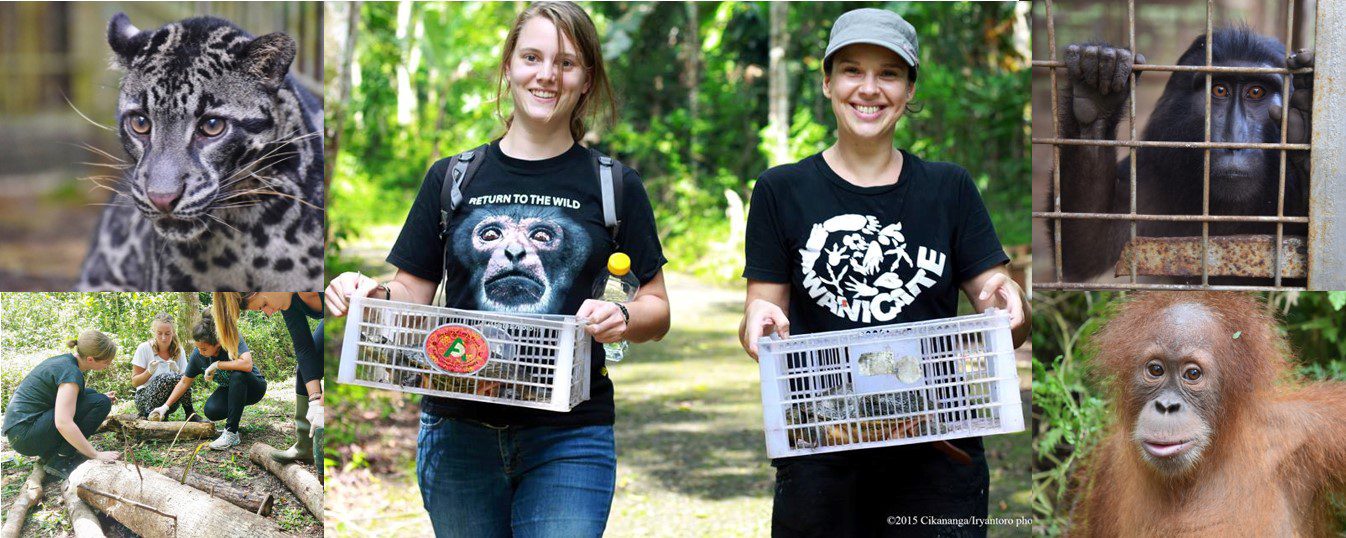
Cikananga Wildlife enter (YKT) is a non-governmental and non-profit organization for conserving Indonesian wildlife. It encompasses ikananga Wild Animal Rescue enter (PPS ), onservation Breeding enter ( B ), Sustainable Farming Program (PPB ), and Wildlife Learning enter. The enter was established in 2001. Since then, it has been dedicating its efforts to the welfare and conservation of Indonesian wildlife and its habitat. It provides facilities and support to rehabilitate confiscated wild animals, helps them regain natural behaviour lost during captivity, and tries to reintroduce them into their natural habitat.

The centre also provides a permanent sanctuary for animals that cannot be released back into the wild. There are about 550 animals ranging from crocodiles to hornbills and sun bears to primates such as orangutans and gibbons. Most animal are (critically) endangered, and on the brink of extinction. They usually arrive at Cikananga in a severely neglected state and
need medical care. Y KT aims to assist the government in rescuing and conserving Indonesian wildlife and teaching the public about the correct treatment and care of animals.

The Sustainable Farming Program or Program Pertanian Berkelanjutan Cikananaga (PPB ) is dedicated to sustainable agriculture practices that support food for the animals at Y KT, supporting local communities, preserve natural resources, and contribute to wildlife conservation in Indonesia.

The mission of PPB is to promote sustainable food systems that protect biodiversity and foster ecological balance. Through regenerative agriculture, agroforestry, and eco-friendly farming practices, PPB works to create a positive impact on both local communities and the environment.

Project Focus

The placement will involve defined projects tailored to the student’s background and PhD topic. Areas may include:

  • Soil health and nutrient cycling
  • Integrated pest management
  • Comparison of soil mulches on soil moisture and weed suppression
  • Pollinator diversity in regenerative systems vs conventional farms
  • Cost analysis of regenerative vs conventional farming
  • Regenerative land management practices
  • rop-soil interactions and sustainable
    productivity
  • Field-based data collection and analysis

What you will gain

  • Practical experience in regenerative agriculture systems
    • Propagation, greenhouse management and maintenance, harvesting and post-harvest handling, soil cultivation and composting, compliance with organic growing standards.
  • Exposure to applied science beyond academia
  • Development of transferable skills:
    • Project design and management
    • Science communication
  • Insight into careers in environmental and agricultural sectors

How to apply

Please send the following:

  • A short expression of interest (max 1 page)
  • CV
  • Brief statement on how this placement aligns with your PhD
  • to [email protected]

Main contact

Scott Hartle, Farm Manager
[email protected]
Website: https://www.cikanangawildlifecenter.com/
Instagram: @ppbc_cikananga

Multiple PIPS Opportunities – Chief Data Officer Group, UK Health Security Agency

About UKHSA

UK Health Security Agency (UKHSA) is an executive agency, sponsored by the Department of Health and Social Care (DHSC). At UKHSA, our mission is to protect people’s health by preventing and responding to threats—whether that’s a new pandemic, everyday infections like influenza, or environmental dangers like radiation or extreme weather. We save lives, protect livelihoods, and work with partners across the NHS, care systems, and globally to keep communities safe.

We’re a hub of scientific and operational expertise, tackling health challenges at every level—local, national, and international.

The Chief Data Officer (CDO) group is the analytical powerhouse of UKHSA and plays a key role in making sure data is used safely, legally, and ethically. We support every step of the data journey—from collecting and managing information to analytics and delivering insights that drive real-world action. If you’re passionate about using data to make a difference and want to help solve big health challenges, there’s a place for you here in the CDO group.

Period of placements

Placement start date: April 2026 onwards
Duration: 3 months

Working pattern and location of placements

Placements will be remote/hybrid with occasional office/event attendance, but this is at the successful candidate’s discretion. Our head office is in Canary Wharf, we also have offices in Liverpool, Leeds and Birmingham.

Full-time is preferred so you can fully immerse yourself in the team and project, but we will work flexibly if part-time hours are required. Placements must be completed in one continuous block due to IT and data access/security requirements.


Placements

The UKHSA are offering a number of placements which will be suitable for PIPS:

  • D&D and AI Digital Delivery (MT)
  • Digital and Data Mapping (P)
  • Digital & Data Product Analysis (L)
  • Digital & Data Project Management
  • UKHSA Health Data Model DTP Placement

Please use the links below to see further information on each placement:


How to apply

Closing date for applications: 31st May 2026

Application format: CV and a 500/1000-word (max) cover letter to evidence how you fit the project requirements, skills and what you can bring to this role.

How to submit an application:

Send your CV and a cover letter (max 500/1000 words) to the CDO Partnerships Team, UKHSA, [email protected] with the subject line of the role to which you’re applying e.g. “AI Digital Delivery DTP application”.

Please note this opportunity is being advertised at multiple universities.


Support for students

UKHSA is an excellent placement opportunity as we have a developed culture of learning and development, fostered in an inclusive environment. To ensure that the postholder has opportunities to expand their skillsets and to develop professionally, we can provide some training in analysis, where required, but we also encourage the student to engage with subject matter experts and other early career researchers (ECR) across the UKHSA. At UKHSA, we have a thriving Early Career Research network led by our CDO Partnerships team. The student will have the opportunity to join and be supported by the ECR network within the UKHSA, and by other ECRs and team members within the host team. The ECR network has fortnightly meetings to bring learning and development opportunities to placement students as well as quarterly away days at our head office.

APBI – Science Communication – STEM Education

Background

The ABPI exists to make the UK the best place in the world to research, develop and use new
medicines. We represent companies of all sizes who invest in discovering the medicines of the
future.

Our members supply cutting edge treatments that improve and save the lives of millions of people.
We work in partnership with Government and the NHS so patients can get new treatments faster
and the NHS can plan how much it spends on medicines. Every day, we partner with organisations in the life sciences community and beyond to transform lives across the UK.

As part of ABPI’s work to communicate on the discovery, development, regulation and manufacture
of medicines, we have an award-winning Resources for Schools website (https://www.abpischools.org.uk/) with interactive content and animations to support science
teaching and learning for teachers and young people. The resources are in line with the curriculum,
and many of them link topics studied in school to their application in industry and research. All our
resources link science topics covered in school to the world outside and, particularly, to the
treatment of disease.

Project offered

The ABPI is offering an exciting opportunity for a PIPS student to apply bioscience knowledge in a
science communication context. The ABPI dedicated website for schools aims to support teachers and students drive long term achievement and attainment in STEM subjects.

The ABPI retains a commitment to support STEM education at all levels through the development of resources to promote learning and engagement across key stages 1 to 5.

Particular areas under development are:

  • Tackling mis- and disinformation
  • Ethical use of animals in research
  • Support for medical charities

This 12 week project will centre around the above areas with the student conducting online
research, liaising with subject experts or other external stakeholders as appropriate, training on use
of in-house software for content creation, and drawing on the student’s own creativity and
knowledge to produce written and interactive content focused primarily on key stage 5 Extended
Project Qualification supporting material, as well as scope for producing some content for younger
key stages.

The output of the project is expected to include:

  • Review of the desk-based research already undertaken
  • Production of new resources linking to agreed objectives
  • Content will be packaged for use on the ABPI award-winning schools’ website

The student will be working within the Education & Examinations team and will liaise with colleagues across ABPI and within our member companies as required. Where there are opportunities for attendance at internal meetings or with pharmaceutical site companies, the student will be able to take advantage of these, alongside any other opportunities to build a personal network.

The successful applicant can expect to have a supervisor who would meet regularly for guidance and support.

Timing

The exact timing can be confirmed with the successful applicant, though likely undertaken across Q3 &/ Q4 2026 – negotiable for the right candidate. The project should be completed over the 12-week placement. This is a contract for Monday to Friday 9-5pm, with a one-hour lunch break.

Location

The ABPI have offices at 2nd Floor Goldings House, Hay’s Galleria, 2 Hay’s Lane, London, SE1 2HB,
and currently adopt hybrid working – the exact number of days in the office/working remotely can
be negotiable for the right candidate, so do not let location dissuade you from applying.

Benefits

This project is a great opportunity to gain and develop science communication experience, with
similar projects in the past having provided opportunities to develop contacts which could be helpful to someone considering a future career in industry. The successful applicant can be expected to be treated as a member of the ABPI Education & Examinations Team that sits within the wider Medical Affairs Directorate, and as such, will benefit from professional development, cross functional working, interaction with wider stakeholders and an opportunity to gain a deeper understanding of the pharmaceutical industry.

Funding

We reimburse modest travel expenses when travelling to the London offices. If during the project
you are invited to, and accept, an external visit, travel expenses and reasonable lunch expenses will
be fully reimbursed.

Applications

A CV and covering letter should be sent to Andrew Croydon, Education & Examinations Policy and
Partnerships Director, ABPI ([email protected]), before Monday 25th May 2026. Should you
have any questions prior to applying, please do not hesitate to be in contact.