Where did you go and what did you do?
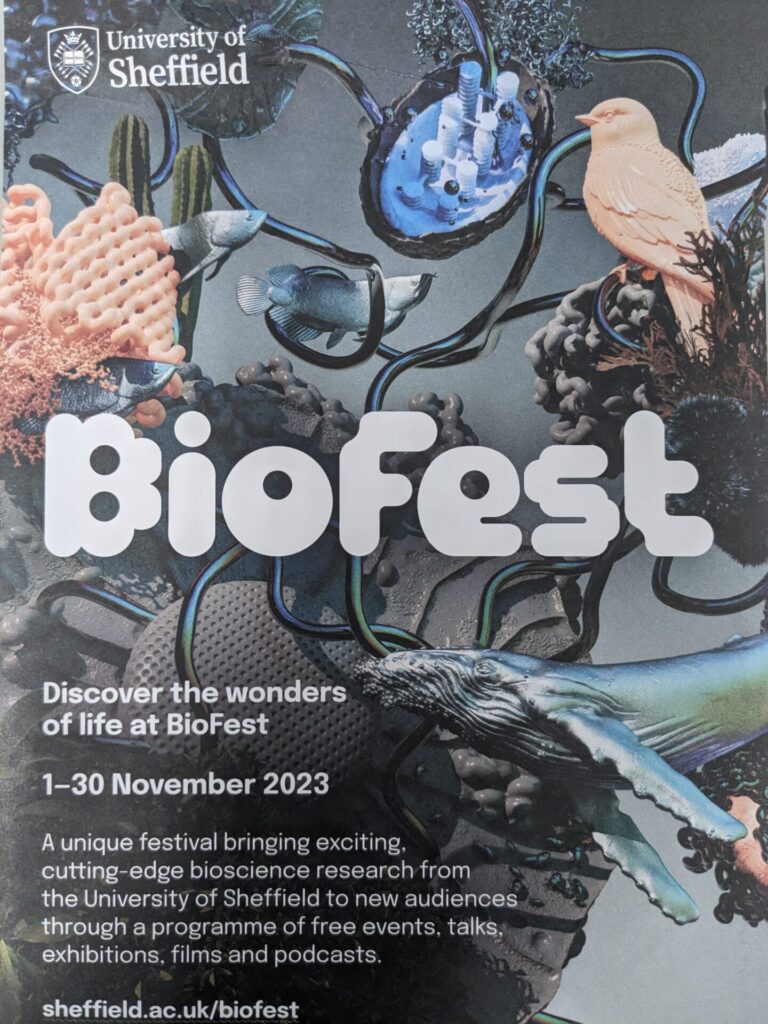
I worked with the University of Sheffield’s public engagement team for my PIPs on a flexible part-time basis to help with two of their major public engagement events in the 2023/24 calendar: Biofest (Nov 2023) and the Festival of the Mind (Sept 2024). I was more heavily involved in the planning and delivery of Biofest compared to Festival of the Mind and they both utilised very similar skills, so to avoid this being too lengthy I’m just going to focus on my experience with the former.
Biofest was a huge public outreach festival that was organised to showcase the amazing research taking place in the then newly formed School of Biosciences. We disseminated this research to the general public and key stakeholders in a variety of ways, including multiple science-art commissions, creative projects with local schools, and several public open nights where the University opened its doors to the public and engaged people of all ages with interactive activity stalls and inspiring talks from some of our most accredited scientists. It was a hugely successful and impactful event; over 200,000 people visited Firth Hall during the public open nights and 90% of visitors said that they came away with a better understanding of the research taking place in the department.
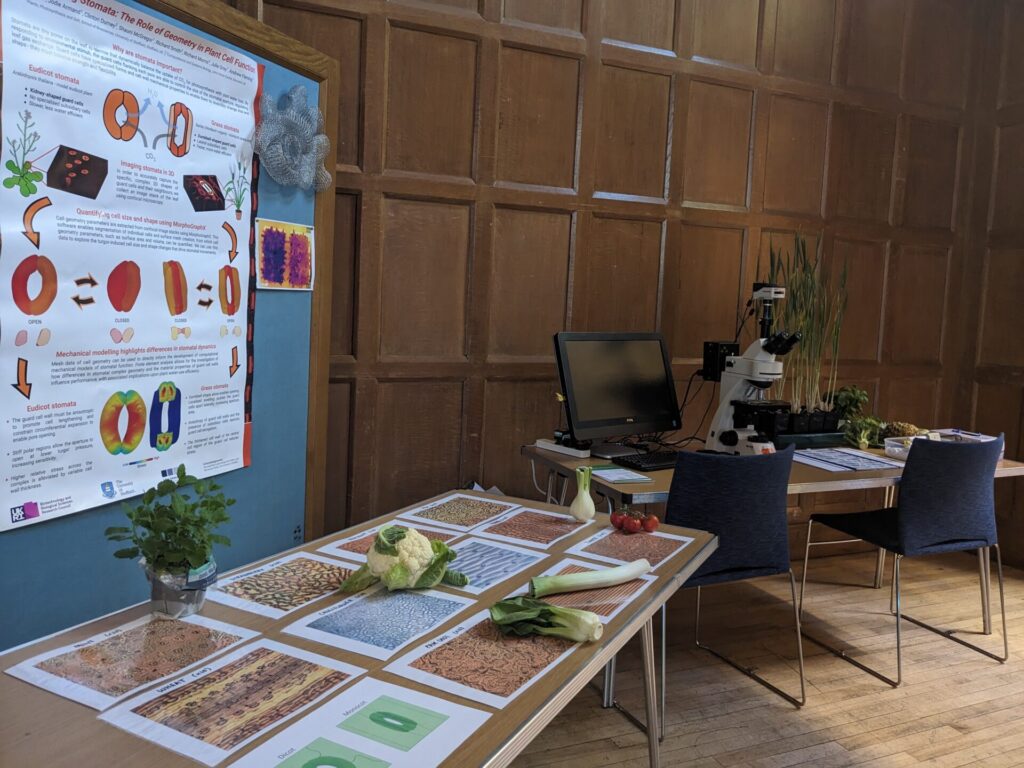
I took on a variety of different roles during my time with the public engagement team and helped with several aspects of the organisation and delivery of Biofest. This included liaising with the students and staff that were hosting an interactive activity stall during the public open nights to ensure their activities were safe, engaging and effectively communicated their research, as well as editing the brochure for the festival to make sure all its information was scientifically correct but easily accessible to a wide audience. After the festival I also helped analyse the public response and collected feedback from the students and staff that collaborated with artists and/or participated in the public events, which contributed towards the public engagement team’s formal evaluation of the festival’s success.
I also had the honour of working directly with the internationally renowned artist Luke Jerram who was commissioned to make a new piece of artwork for the festival that encapsulated our research endeavours in combating climate change. In this collaboration I took the role of scientific adviser and discussed with him all the photosynthetic research taking place in the department. This inspired him to create ‘Microcosmos’, a collection of glass diatoms (photosynthetic algae) which was the centerpiece to the festival and is now on permanent display in the entrance to Firth Court. During our collaboration I also visited his studio in Bristol to record a podcast about the science and creative process behind his artwork, which is on the University of Sheffield Player (digital archive).
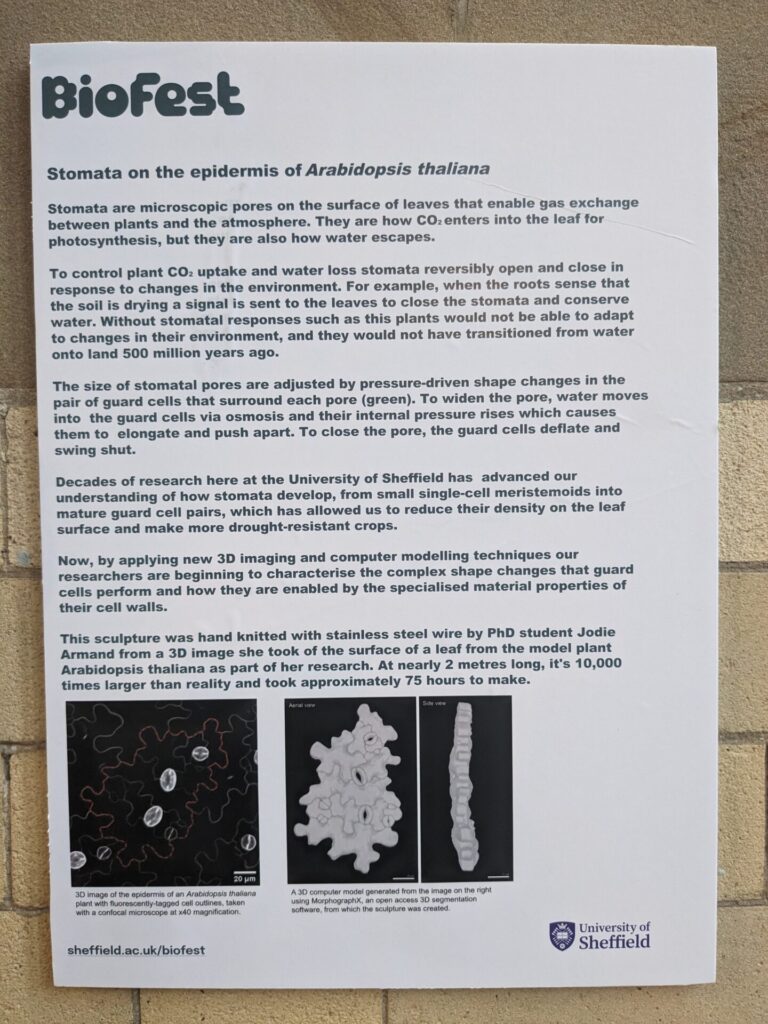
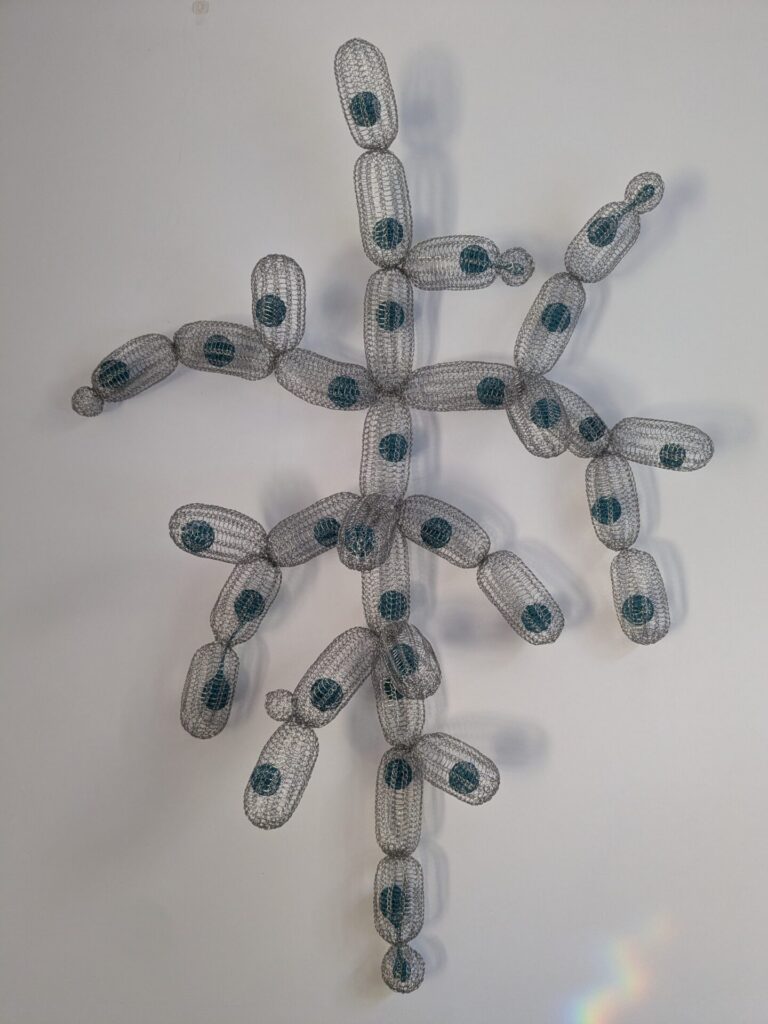
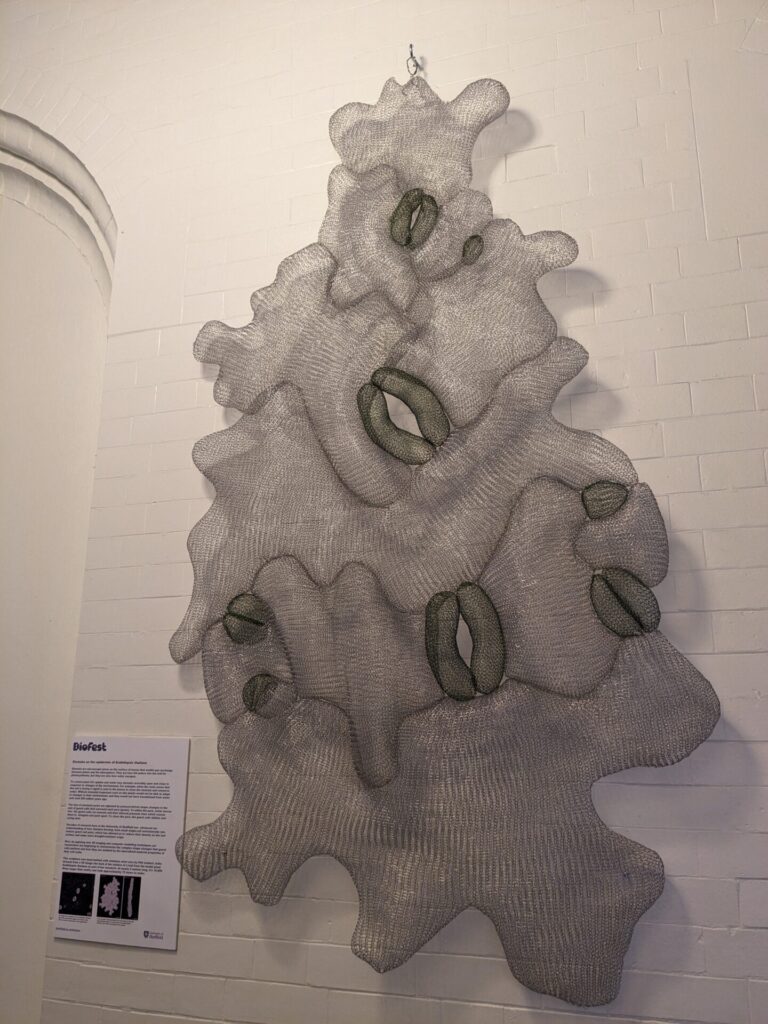
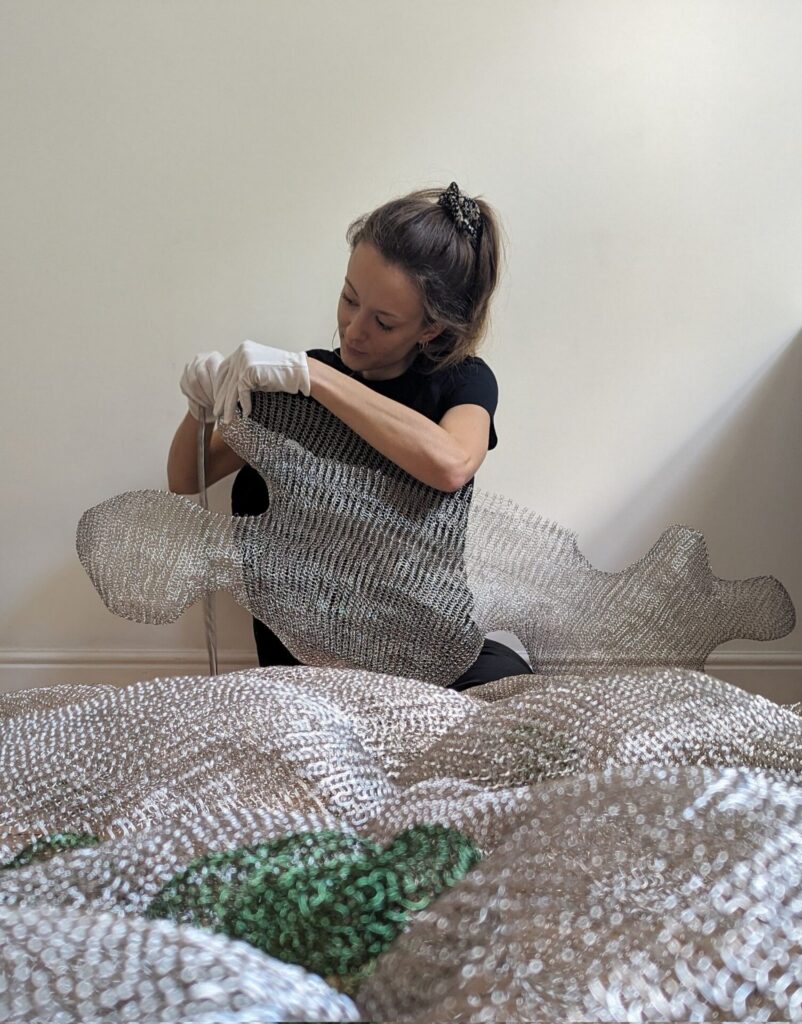
Feeling very inspired by my time working with Luke, I then decided to make a piece of artwork informed by my own research that utilised my own creative skills. I image cells on the leaf surface in 3D for my PhD to help us understand how they change shape, and I adapted my knitting technique to work with metal wire and went about knitting the cells captured in one of my 3D images using stainless steel. The final sculpture turned out much better than anticipated and I was fortunate enough to be allowed to have it on display during Biofest, and it was so well received that the University decided to purchase it and make it part of their permanent display in Firth Court. Thanks to the exposure from the festival I’ve since had several other commissions from scientists wanting to collaborate with me and create some science-art, and I’m currently working on a new sculpture for a ‘Future of Food’ exhibition that is taking place at the Science Museum in London this summer!
What made you want to do that particular PIPS?
I wanted to work with the University’s public engagement team for my PIPs because I have very strong practical creative skills that weren’t being used by my research, and I wanted the opportunity to apply these in an impactful way to help the general public engage in scientific research. I had actually had previous interactions with the public engagement team a few years earlier when trying to secure funding to collaborate with an external artist for the Festival of the Mind in 2022. Unfortunately we didn’t get the funding and so the project never went ahead, but it left me wondering how the public engagement team sources funding for public engagement projects and how they decide how this funding gets allocated. So, a year or so later when I was thinking about where to do my PIPS, working with the public engagement team to utilise my creative skills and get an insider’s perspective on the funding landscape seemed like a no-brainer!
What skills have you gained from your PIPS?
Working with the University’s public engagement team for my PIPs definitely improved my event organisation, people and risk management, negotiation, and interpersonal skills. I’ve also come away from my PIPs with a much better understanding of how funding for public engagement is acquired and allocated having heard the conversations and decisions that take place behind the scenes. Rather than take a 3 month break from my research I decided to do my PIPs on a flexible part-time basis (a few hours per week) so that I could make the most of the different events that the team had planned throughout the 2023/24 calendar. This meant picking up extra work here-and-there and fitting this around my research was challenging, but it undoubtedly strengthened my time management skills. Finally, as you all know doing a PhD can feel very isolating, but when I was working with the public engagement team I was constantly interacting with new people of different ages, backgrounds and opinions which was so refreshing and I now feel much more confident talking to anyone about anything at anytime!
Think outside the box! Do something that you will genuinely enjoy, and make it worthwhile for you.
What has been the impact (or likely future impact) of your PIPS?
My PIPs and all the additional opportunities it led to have had such a positive impact on my future career. I now have a much better understanding of the career opportunities that exist in the public engagement sector, and more specifically those that lie at the crossover between the sciences and the arts. Now that I’ve experienced sci-art collaborations as a scientist, an artist and the ‘middleman’ that sits between them, I am so much more confident to explore this territory when I finish my PhD and I’m really excited to see where it leads!
How would you sum up your PIPS experience?

I thoroughly enjoyed working with the public engagement team for my PIPS due to the variety of different roles it allowed me to take, the independence to pursue my own creative ambitions and the wealth of opportunities that it has led to.