Background
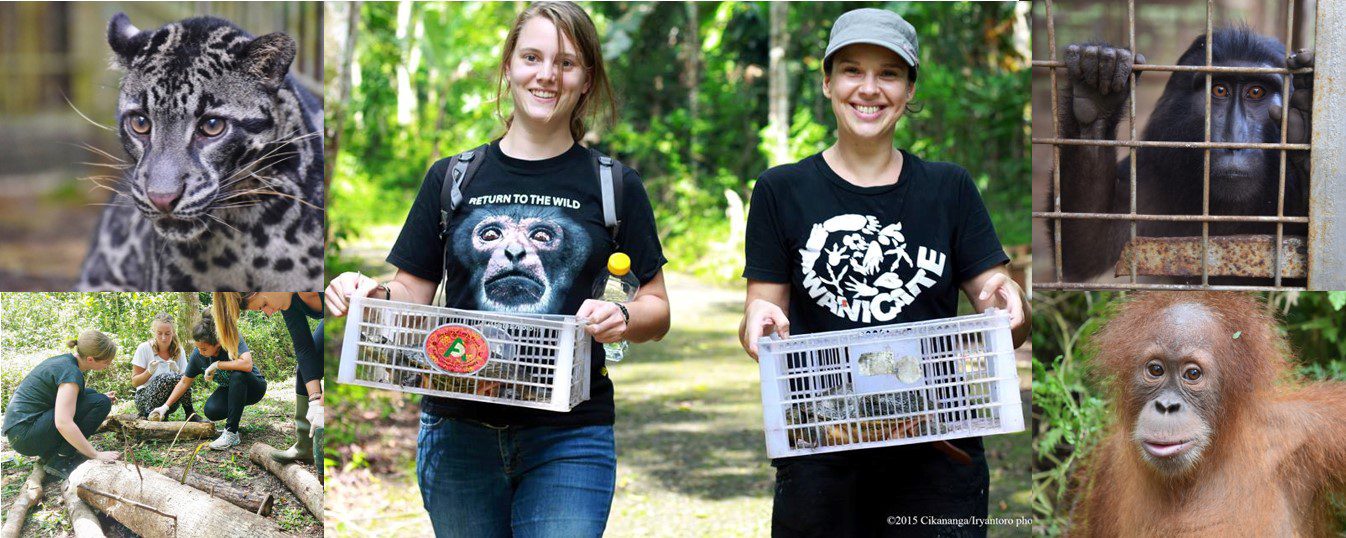
Cikananga Wildlife enter (YKT) is a non-governmental and non-profit organization for conserving Indonesian wildlife. It encompasses ikananga Wild Animal Rescue enter (PPS ), onservation Breeding enter ( B ), Sustainable Farming Program (PPB ), and Wildlife Learning enter. The enter was established in 2001. Since then, it has been dedicating its efforts to the welfare and conservation of Indonesian wildlife and its habitat. It provides facilities and support to rehabilitate confiscated wild animals, helps them regain natural behaviour lost during captivity, and tries to reintroduce them into their natural habitat.
The centre also provides a permanent sanctuary for animals that cannot be released back into the wild. There are about 550 animals ranging from crocodiles to hornbills and sun bears to primates such as orangutans and gibbons. Most animal are (critically) endangered, and on the brink of extinction. They usually arrive at Cikananga in a severely neglected state and
need medical care. Y KT aims to assist the government in rescuing and conserving Indonesian wildlife and teaching the public about the correct treatment and care of animals.
The Sustainable Farming Program or Program Pertanian Berkelanjutan Cikananaga (PPB ) is dedicated to sustainable agriculture practices that support food for the animals at Y KT, supporting local communities, preserve natural resources, and contribute to wildlife conservation in Indonesia.
The mission of PPB is to promote sustainable food systems that protect biodiversity and foster ecological balance. Through regenerative agriculture, agroforestry, and eco-friendly farming practices, PPB works to create a positive impact on both local communities and the environment.
Project Focus
The placement will involve defined projects tailored to the student’s background and PhD topic. Areas may include:
- Soil health and nutrient cycling
- Integrated pest management
- Comparison of soil mulches on soil moisture and weed suppression
- Pollinator diversity in regenerative systems vs conventional farms
- Cost analysis of regenerative vs conventional farming
- Regenerative land management practices
- rop-soil interactions and sustainable
productivity - Field-based data collection and analysis
What you will gain
- Practical experience in regenerative agriculture systems
- Propagation, greenhouse management and maintenance, harvesting and post-harvest handling, soil cultivation and composting, compliance with organic growing standards.
- Exposure to applied science beyond academia
- Development of transferable skills:
- Project design and management
- Science communication
- Insight into careers in environmental and agricultural sectors
How to apply
Please send the following:
- A short expression of interest (max 1 page)
- CV
- Brief statement on how this placement aligns with your PhD
- to [email protected]
Main contact
Scott Hartle, Farm Manager
[email protected]
Website: https://www.cikanangawildlifecenter.com/
Instagram: @ppbc_cikananga